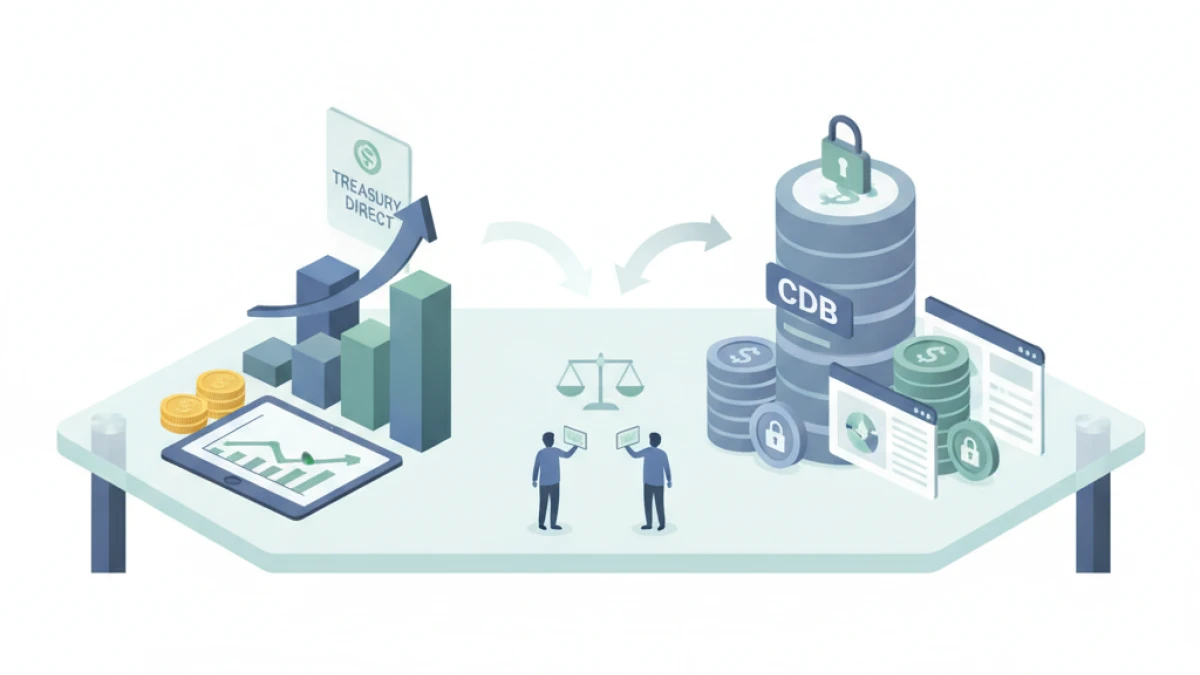
Investing safely with a good return is the wish of many. That is why understanding the differences between Tesouro Direto and CDB is essential to making the right choice. Both are popular investment options that offer distinct advantages, but which one offers the better return and security? Let's uncover this for you.
What Tesouro Direto and CDB are and how they work
The Tesouro Direto is a federal government program that allows you to invest in public bonds. You lend money to the government and receive interest in return. It is known for its safety, as it is guaranteed by the National Treasury.
The CDB (Bank Deposit Certificate) is a security issued by banks and finance companies. When you buy a CDB, you are lending money to the financial institution, which in return pays interest on the agreed term.
Both offer various modalities, such as prefixed, post-fixed or inflation-linked, which affects the return of each investment.
Advantages and benefits of Tesouro Direto and CDB
Tesouro Direto is very advantageous for those seeking safety and liquidity, as it allows daily redemptions on the most liquid bonds. In addition, the variety of bonds makes diversification possible according to your profile.
CDBs, in turn, generally offer higher returns than savings accounts and may be exempt from income tax for amounts invested in smaller banks or under specific conditions. Another advantage is the guarantee of the Credit Guarantee Fund (FGC) for investments up to the limit, providing extra security.
Precautions and points of attention
Despite its safety, Tesouro Direto suffers price fluctuations in its bonds, and the value can change before maturity. This may generate losses if you need to sell early.
CDBs, on the other hand, depend on the financial health of the issuing bank. Smaller banks tend to pay more but carry more risk. It is important to check the institution's rating and the FGC guarantee limit, which covers up to R$ 250 thousand per CPF per bank.
How to apply and start investing
To invest in Tesouro Direto, simply open an account with an authorized brokerage, such as XP, Rico or Modal. After registering, you can buy bonds through the website or app, choosing the type and term you prefer.
Investing in CDBs is done directly through the bank or brokerage. For example, you can contract CDBs at Banco Inter, Banco Bradesco or the fintech PicPay. It is essential to compare rates, terms and returns before deciding.
Conclusion
Both Tesouro Direto and CDBs can be great alternatives for investing safely and earning returns. Tesouro Direto is usually safer due to the government guarantee, while CDBs can offer higher returns, depending on the issuing bank.
Understand your profile, goals and timeframes to choose the best investment. Always consult your financial advisor and pay attention to the details to maximize your gains safely.