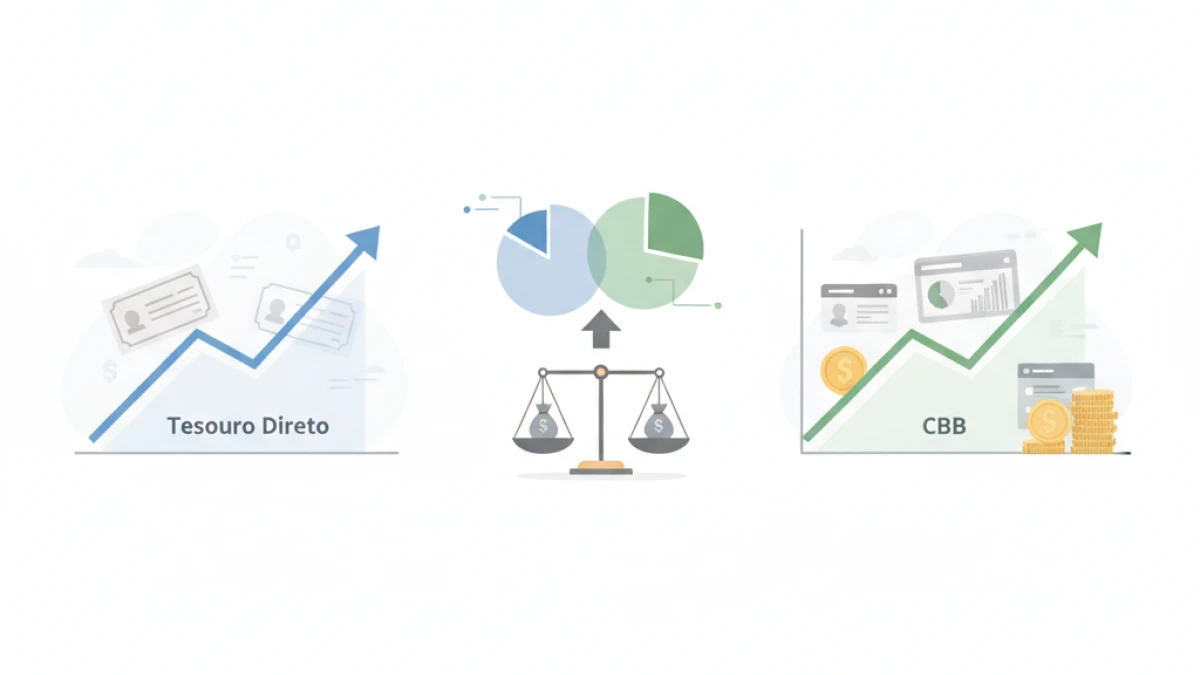
If you're starting to invest, a common question is: Tesouro Direto or CDB, which of these investments offers the better return? This is an important question for anyone who wants to start out safely and with good returns. Understanding the characteristics of each option helps you make the right choice for your profile.
What it is / How it works
Tesouro Direto is a federal government program where you can buy government bonds over the internet. These bonds work like a loan you make to the government, which pays interest in return. There are several types, with prefixed, post-fixed or inflation-linked returns.
The CDB (Bank Deposit Certificate) is a private security issued by banks and finance companies. By buying a CDB, you lend money to the financial institution and receive interest as a return. The return can be prefixed, post-fixed or linked to the CDI, the rate used in loans between banks.
Advantages and benefits
Tesouro Direto is considered a safe investment, since the risk of the government defaulting is low. It also allows investments with small amounts, ideal for beginners. You can choose bonds that track inflation, protecting your money against loss of purchasing power. Another point is daily liquidity, which makes it easy to redeem before maturity.
CDBs can offer higher returns than Tesouro Direto if you look at products from smaller banks or finance companies that pay more interest to attract investors. In addition, many CDBs are covered by the Credit Guarantee Fund (FGC) up to R$ 250 thousand, protecting your money in case the bank fails. Some CDBs are free of fees, making investing easier.
Precautions and points of attention
With Tesouro Direto, the main point is the fluctuation in bond prices if sold before maturity, which can affect the final amount. Another thing to watch is taxation: income tax is deducted upon redemption or at maturity, following the regressive table.
With CDBs, pay attention to the issuing bank: smaller institutions may pay more, but they carry greater risk. Also check the term and liquidity conditions, since some CDBs have a grace period and charge IOF if redeemed within a few days. Taxation for CDBs is similar to Tesouro Direto, following the same regressive income tax model.
How to apply / get started
To invest in Tesouro Direto, you just need to open an account with a brokerage or bank that offers the service, such as XP, Modal or BTG Pactual. Once the account is open, you can access the Tesouro Direto website and choose the bond that best fits your goal. The process is 100% online and simple.
To invest in CDBs, you can look at digital banks such as Inter, Neon or PagBank, which offer this type of investment easily in their apps. Investment brokerages such as Rico and Ágora also make it easy to buy CDBs from various institutions, allowing you to compare returns and terms.
Conclusion
Choosing between Tesouro Direto or CDB depends on your profile and goals. For those seeking safety, daily liquidity and protection against inflation, Tesouro Direto is generally the best option. If your goal is higher returns and you accept moderate risks, CDBs from smaller banks may be interesting.
The important thing is to start investing, understand how it works and choose products suited to your financial planning. With financial education, even beginners can achieve good results and security in their investments.