When investing, one of the most frequent questions is whether it is worth more to choose equity funds or fixed income funds. The decision can directly impact your financial results and depends on your investor profile, your goals and the current economic scenario. In 2026, understanding the characteristics of each type of fund and how they fit your profile is essential to building a balanced and efficient portfolio.
What are equity funds and fixed income funds?
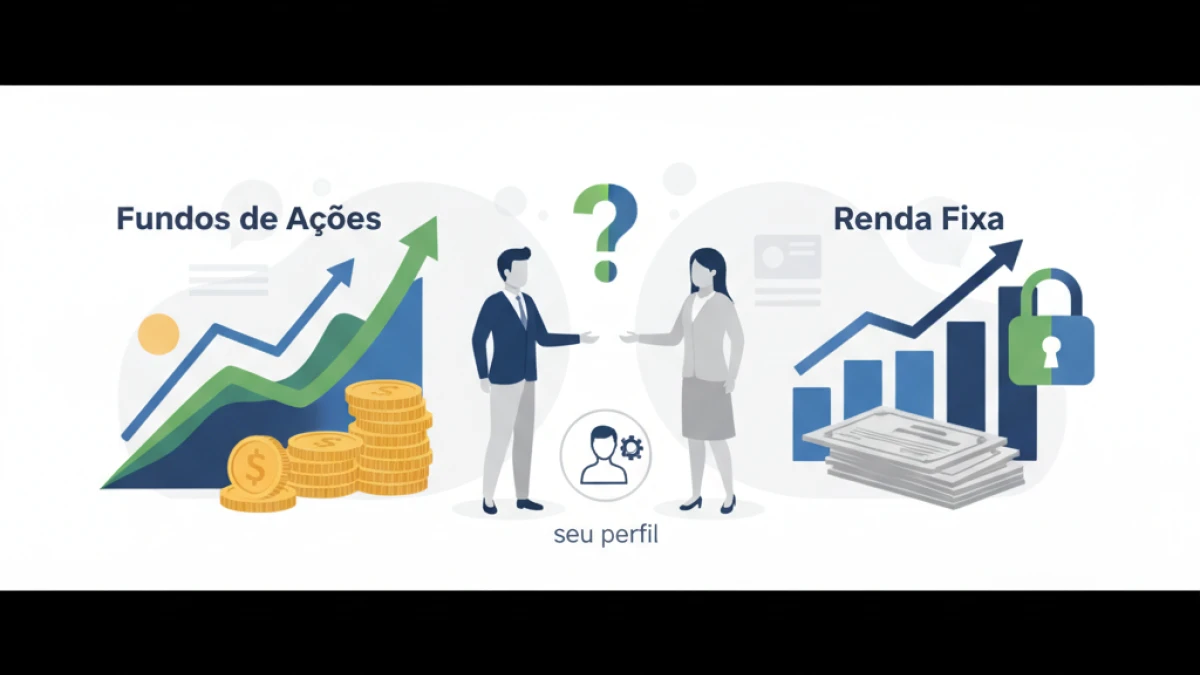
Fundos de ações são investimentos que aplicam a maior parte do patrimônio em ações negociadas na bolsa. São indicados para quem busca maior potencial de retorno e está disposto a assumir mais risco, pois a rentabilidade está sujeita à volatilidade do mercado de ações.
Fundos de renda fixa aplicam predominantemente em títulos públicos, privados ou outros ativos de renda fixa, como CDBs, debêntures e letras de crédito. São apropriados para investidores que buscam preservação de capital, rendimentos mais estáveis e menor exposição à volatilidade.
Comparing risks and returns
In general, equity funds present higher risk due to fluctuations in the capital market, but also offer greater earnings potential in the long term. On the other hand, fixed income funds tend to deliver more predictable and consistent returns, but generally lower ones.
For example, in a scenario of economic growth, equity funds may show considerable appreciation, while fixed income funds may be limited by the yields of their bonds. In moments of volatility or crisis, fixed income tends to prove safer.
Considerations about investment horizon
Another decisive factor is the redemption period. Investors with long-term goals, such as retirement, can benefit from equity exposure, enduring fluctuations in pursuit of better returns. For short- or medium-term goals, the security of fixed income funds is recommended to avoid significant losses.
How to choose the best strategy for your profile
The conservative profile generally aligns with fixed income funds or multimarket funds with low volatility, prioritizing safety and liquidity.
The moderate profile may seek a diversified portfolio, combining fixed income funds for stability and equity funds for growth potential.
The aggressive profile tends to allocate a larger share of its assets to equity funds and investments with higher volatility, aiming to maximize gains in the long term.
- Assess your risk tolerance: find out how much discomfort you feel in the face of temporary declines.
- Set your goals: retirement, buying a property or an emergency reserve influence the choice.
- Consider your horizon: how long do you intend to keep the money invested?
- Review periodically: your strategy may need adjustments as life and market conditions change.
Financial institutions offering diversified funds
In Brazil, traditional banks such as Bradesco, Santander and Banco do Brasil offer a wide range of funds for different profiles. In addition, fintechs and digital platforms such as Inter, Órama and BTG Pactual digital make access to funds with various risk levels and competitive fees easier.
For international investors, platforms such as Revolut and Avenue allow diversifying investments, including foreign funds that can balance the portfolio against domestic risks.
Conclusion: how to align investments with your profile in 2026
Choosing between equity or fixed income funds is not a one-size-fits-all decision. Understanding your profile, financial goals and investment horizon allows you to build a portfolio that balances risk and return in a sustainable way.
In 2026, with the financial market increasingly accessible and diverse, the ideal is to take advantage of the available options to diversify and protect your wealth. Always seek information from reliable sources such as the Central Bank of Brazil and the Brazilian Securities and Exchange Commission (CVM).
Want to start investing with the right strategy? Assess your profile and consult your financial advisor to make more assertive decisions.