Introduction
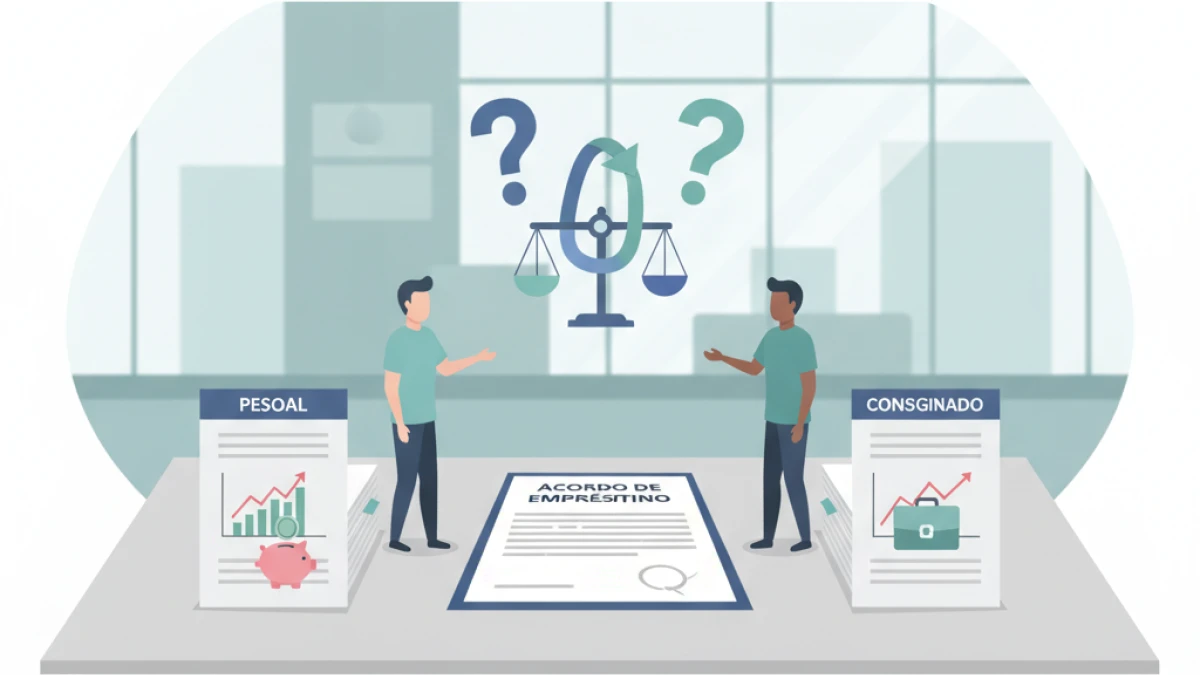
When looking for credit, it is common to wonder whether to choose a payroll-deductible loan or a personal loan. These two options are popular among consumers who need money quickly, but they have different characteristics and costs. Understanding which one offers the best rates is essential to avoid debt and ensure healthy financial planning.
What is a payroll-deducted loan?
The payroll-deductible loan is a type of loan in which the debt payment is deducted directly from the salary or social security benefit. This guarantee reduces the risk for financial institutions, resulting in lower interest rates and longer repayment terms.
Main features
- Lower interest rates due to the guarantee of payroll deduction;
- Generally higher credit limit;
- Available to retirees, INSS pensioners and public servants or employees of partner private companies;
- Fixed installments deducted directly from the salary or benefit.
What is a personal loan?
The personal loan is an unsecured line of credit, released after analysis of the borrower's profile and credit history. Financial institutions grant this credit based on proven income, but without automatic payroll deduction, which may mean higher interest rates.
Main features
- Interest generally higher than payroll-deductible loans;
- Repayment terms vary, but are usually shorter;
- No need for a link with an employer or social security agency;
- Flexibility regarding the use of the funds.
Comparison of interest rates in 2026
According to recent data from the Central Bank and Febraban, average rates for payroll-deductible loans range from about 1.7% to 2.3% per month, while personal loan rates can vary between 3.5% and 6% per month, depending on the financial institution and the client's profile.
Institutions such as Banco Original and the Sicoob cooperative, which offer payroll-deductible loans with competitive rates, contrast with digital platforms such as PicPay and Mercado Pago, whose popularity in personal loans has grown despite higher interest rates.
When is a payroll-deductible loan the best option?
If you are a retiree, INSS pensioner, public servant or have a CLT contract with payroll deduction, the payroll-deductible loan is usually more advantageous due to its reduced rates and extended terms. This option is ideal for those seeking sustainable debt and wanting to avoid surprises in the budget.
When to opt for the personal loan?
The personal loan is recommended for those who do not have access to a payroll-deductible loan, such as freelancers and business owners, or for those who need quick credit and do not want to commit their salary. Even so, it is essential to compare the rates and conditions offered by banks such as Bradesco, Banco Bari and international fintechs such as Revolut.
Tips for getting better rates on a personal loan
- Research and compare offers from several institutions;
- Keep your name clean and a positive credit history;
- Opt for shorter terms to reduce total interest;
- Negotiate terms directly with the bank manager.
Additional aspects to consider
Beyond interest rates, it is important to analyze administrative fees, the CET (Total Effective Cost), as well as the commitment of monthly income and the consequences in case of late payment. Solid institutions such as Banco do Brasil and Santander usually detail all this information, helping to make more informed decisions.
Conclusion
When choosing between a payroll-deductible loan or a personal loan, the best rate depends on the borrower's profile, employment relationship and credit need. The payroll-deductible loan generally offers the lowest rates, ideal for those with guaranteed payroll deduction. The personal loan is an alternative for those who do not have this option, although it involves higher interest.
To secure the most advantageous conditions, research widely, evaluate all expenses and choose trustworthy institutions. Financial planning is the best way to use credit in your favor in 2026.