Think of this as a personal audit of your own financial past.
Over the years, banks, former employers, insurers, and even government offices can lose track of people they owe money to. When that happens, the funds rarely vanish. They often get handed to state or federal agencies, where they can sit for years waiting for the rightful owner.
Most people never go looking, usually because they assume it is complicated or that they have nothing waiting. The truth is simpler: you just need to know where to retrace your own steps.
This guide treats the search like a personal money audit, walking you through each place your cash could be hiding in plain language.
- The most common types of forgotten money, from old bank accounts to uncashed final paychecks
- Where to begin your free unclaimed property search by name
- Which federal databases to check for tax refunds, pensions, and closed-bank funds
- Why timing can matter for certain claims, and how to avoid waiting too long
- What documents you may need to file a claim, including on behalf of a relative who has passed
A personal money audit works best when you start with a simple map of your own life. Grab a notebook or open a blank document and begin listing every place you have lived. Old cities and states are important, because money tied to an address can stay registered there long after you move away.
Next, write down every job you have held, even the short-term or seasonal ones. A final paycheck that was never cashed, an expense reimbursement, or a small balance from a retirement plan can quietly become unclaimed property. The more complete your work history, the more thorough your search becomes.
Then add the banks and credit unions you have used over the years. Accounts you opened for a single purpose and forgot about are a common source of lost savings. Branches close, companies merge, and statements stop arriving, yet the balance may still be waiting somewhere.
Do not forget insurance policies, utility deposits, and old investment accounts. A refunded deposit or a matured policy can sit unclaimed if the company could not reach you. These smaller amounts add up more often than people expect.
Finally, consider money connected to relatives. If you are the heir or executor for someone who has passed, their forgotten accounts may be searchable too, with the right documentation.
With this map in hand, you are ready to search in an organized way instead of guessing. Each section below points you toward free, official places to look. Take your time, and treat every entry on your list as a lead worth checking.
Why One Search Is Not Enough
Many people search only the state where they live right now. That overlooks a key point: unclaimed property is usually held by the state connected to your old address or your former employer, not necessarily your current home.
If you have moved across state lines, worked in different places, or kept accounts after relocating, your money could be registered in a state you left years ago. Checking every state on your personal map is what makes the audit complete.
Where To Begin Your Search
- Forgotten checking or savings accounts
- Uncashed final paychecks from old jobs
- Utility or rental security deposits
- Insurance payouts or refunded premiums
- Old pension or retirement plan balances
- Unclaimed tax refund checks
- Matured savings bonds
- Stock dividends or brokerage account balances
Start With Your State Unclaimed Property Office
Each state runs its own program for unclaimed property, and most offer a free online search by name. This is the natural first stop in your audit because it covers so many common sources at once.
When you search, try variations of your name, including maiden names, middle initials, and past spellings. Small differences can hide a match. Search each state from your personal list, one at a time.
Always confirm you are using the state's own free service. Official searches never charge a fee simply to look, so be cautious of anyone asking for payment to show you what is yours.
Searching Multiple States
Work through your address list state by state, noting any possible matches and the steps each office asks you to take.
Federal Money: Tax Refunds And Beyond
State programs are only part of the picture. Several federal sources hold money too, and each one works a little differently from the others.
Unclaimed Tax Refunds
A surprising number of people leave tax refunds behind, often because they did not file a return for a year when they were owed money. Unlike some state-held funds, refunds can have a limited window before they are no longer available. If you suspect a missing refund, it is worth checking your records and confirming the current rules through the official federal tax resource.
Old Savings Bonds
Savings bonds were once a classic gift for birthdays and graduations. Many were tucked into drawers and forgotten, or passed down through families. If a bond has stopped earning interest, you may be able to trace and redeem it through the official federal treasury tool.
Unpaid Back Wages
When a labor investigation finds that an employer underpaid workers, the recovered wages are sometimes held for employees who could not be reached. If you worked for a company that had pay issues, your name may be on such a list waiting for you to claim it.
Closed Bank Funds
If a bank or credit union failed and your deposit was not transferred, insured funds may still be recoverable. A federal deposit insurance resource lets you check for money tied to institutions that have shut down.
Pensions From Companies That No Longer Exist
Pensions can be left unpaid when a company closes or hands its plan to a federal guarantor. If you earned a pension at a former employer that disappeared, there is a dedicated place to search for benefits owed to you.
Mortgage And Housing Refunds
Some homeowners are owed refunds connected to certain government-backed mortgage programs. If you held a qualifying loan, a refund could be waiting even years after you paid the mortgage off.
No Single Federal List
It would be convenient if one website held every type of federal money, but that is not how it works. Different agencies manage different programs, so a complete audit means checking several official places separately.
The next section gathers the main federal databases so you can work through them in order.
What You Will Need To File A Claim
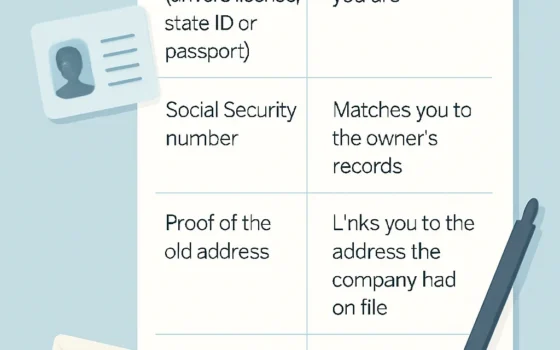
Finding a match is only half the job. To prove the money is yours, you will usually need to gather a few documents.
- A government-issued photo ID
- Proof of your past addresses
- Your Social Security number
- Any records tying you to the original account or employer
Requirements vary by program and by state, so follow the exact instructions each office provides rather than assuming they are all the same.
Claiming For A Deceased Relative
If you are handling the affairs of someone who has passed, you may be able to claim property in their name with additional paperwork proving your role.
- A copy of the death certificate
- Proof of your relationship or legal authority
- Estate or probate documents if requested
- Your own identification
Each office sets its own process for estate claims, so read the guidance carefully and prepare the documents it specifically asks for.
Watch Out For These Red Flags
- Anyone demanding a fee just to search for your money
- Unsolicited messages claiming you are owed a specific amount
- Requests for sensitive details before any verification
- Pressure to act immediately without time to confirm the source
Stay Patient
An audit of your financial past rewards thoroughness more than speed. Work through your list methodically, and treat each possible match as a small case to confirm rather than a guarantee.
Some searches turn up nothing, and that is fine. The goal is to leave no obvious place unchecked, so you know your money is accounted for either way.
Your Audit Map
List Every Place You Have Lived
Start with your addresses, since money is often registered to the state where you once lived rather than your current home. This single list drives much of your search.
Map Your Work History
Write down every employer, including short stints. Final paychecks, reimbursements, and small retirement balances are among the most commonly forgotten sources of money.
Note Banks, Insurers, And Investment Accounts You Have Used
Add every financial relationship you can recall. Closed branches and merged companies are a frequent reason balances quietly become unclaimed property.
Check Each Source Using The Free Official Tools
With your map complete, work through the official state and federal searches one by one. Confirm every tool is free before entering any personal details.