Finding the money is only half the job.
Seeing your name in a free unclaimed money search is exciting, but the cash isn't yours until you prove it belongs to you. The good news: the process is usually simple, free and handled mostly online.
The most common reason a claim gets delayed is missing paperwork. Gather the right documents before you start, and you can skip a lot of back-and-forth with the agency.
The Claim Process, Step by Step
- Select the property on the official state or federal site and begin the claim online.
- Confirm your identity with a government-issued photo ID and, in most cases, your Social Security number.
- Prove your link to the listed address using an old bill, lease, pay stub or bank statement.
- Sign the claim form, which some states require to be notarized for larger amounts.
- Submit and track your claim using the number the agency provides.
Your Checklist
Documents That Prove Who You Are
Before you open a claim, set aside the papers that tie your name, your identity and your old address to the record on file.
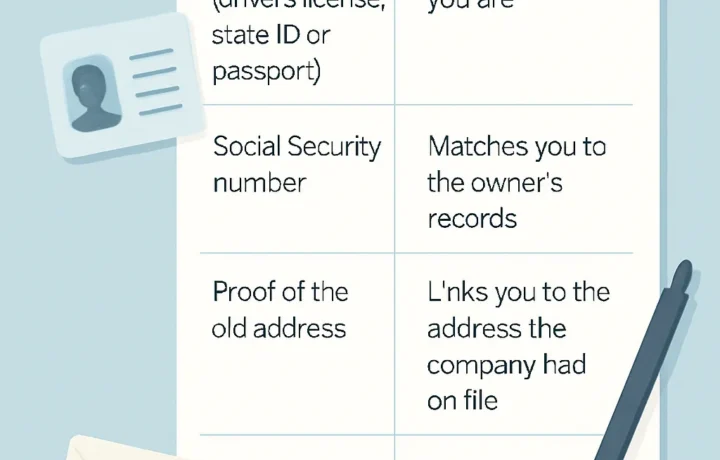
- A photo ID such as a driver's license, state ID or passport, to show who you are.
- Your Social Security number, which helps match you to the owner's records.
- Proof of the old address, linking you to the address the company had on file.
- An account statement, check stub or policy, if you have one, to prove the specific property is yours.
If the property is listed under a previous name, add a marriage certificate or court order.
Why Each Item Matters
Each document answers a question the agency has to settle before releasing funds: Are you really this person? Did you live at that address? Is this specific account, refund or bond truly connected to you? When your paperwork answers all three clearly, the review tends to move faster.
When Someone Else Claims
- Claiming for a deceased relative usually means showing the death certificate and proof of your relationship.
- Claiming as an heir may require probate or estate paperwork naming you.
- Claiming for a business can call for records showing you represent it.
- Claiming jointly held property may need documents from more than one person.
These situations take a little more preparation, but the same principle holds: the clearer you connect yourself to the record, the smoother the free claim process goes.
What to Expect After You File
Once you submit, the agency reviews your identity and your link to the property. Timelines vary, so check your claim number online now and then. If they ask for more, respond quickly to keep things moving.
A Smart Final Habit
Treat your personal money audit as something you repeat. Funds can appear in your name over time, so a yearly check is worth the few minutes it takes.
- Re-search every state where you have ever lived.
- Check federal sources for refunds, bonds and back wages.
- Keep your current address updated with former employers and banks.
- Save copies of your core ID and address documents together.
- Note any previous names you have used.
- Watch for notices sent to old addresses.
- Set a calendar reminder to search again next year.
Always use official, free sources to claim.