One state is rarely enough.
Most people looking for unclaimed money in their name search only the state where they live today. That is a common miss. When a bank, employer or insurer loses track of you, the money is often reported to the state of your last known address, which could be somewhere you left long ago.
If you have moved even once, part of your money could be sitting quietly in another state's records. In this step, you will learn which places to search and the simple tricks that turn up matches people usually overlook.
Step 1: List Every State Where Your Money Could Be
Before opening any website, spend two minutes listing every state where you have:
- Lived, even briefly, including college or temporary towns
- Worked or received any kind of paycheck
- Opened a bank, credit union or brokerage account
- Paid a utility bill or left a rental security deposit
- Held an insurance policy, or had a relative who did
This list becomes your search plan. Remember that money follows the address a company had on file, not the place you call home now.
Step 2: Use a Free Multi-State Search
There are free tools that let you check the unclaimed property records of many participating states in a single search. Using one of these can save you from checking each state's website one at a time.
- Start with just your last name and first name
- Leave the city field blank on your very first search
- Try former last names, including a maiden name
- Search for close relatives whose funds you may inherit
Leaving the city blank matters: it keeps the search wide so old addresses are not accidentally filtered out before you see them.
Why One State Search Falls Short
Imagine you lived in one state during college, worked in a second after graduating, then settled in a third. A forgotten deposit or final paycheck could rest in any of those first two, tied to an address you abandoned years back.
Searching only where you live now leaves those earlier chapters of your financial history untouched. Each move you made is a place where a record could still be waiting for someone who stopped looking.
Names Worth Searching Too
- Your current legal name and any nicknames
- A former married or maiden name
- Common misspellings of your surname
- Your name with and without a middle initial
- Parents or grandparents whose estate you may share
A Picture of Your Money Map
Think of your old addresses as points on a map. Each pin is a place where a record could have been filed and then quietly forgotten over the years.
What to Do When a Match Appears
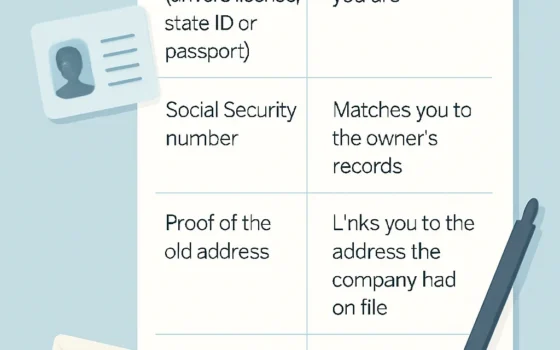
Seeing your name in a results list is encouraging, but it is only the start. Write down the details, note which state holds the record, and keep your list handy. A later step will walk through the documents that connect a listing to you.
Keep It Free
Legitimate searches do not ask you to pay to look. Stick to free, official state resources and verify anything you find directly through those sources yourself.
- Search every state on your list, not just your current one
- Leave the city blank to widen your first search
- Try former and alternate spellings of your name
- Search for relatives whose funds you might inherit
- Record the state and reference for each match
- Verify every listing through official state resources
- Avoid any service that charges a fee to search
Your past addresses are part of your search plan.