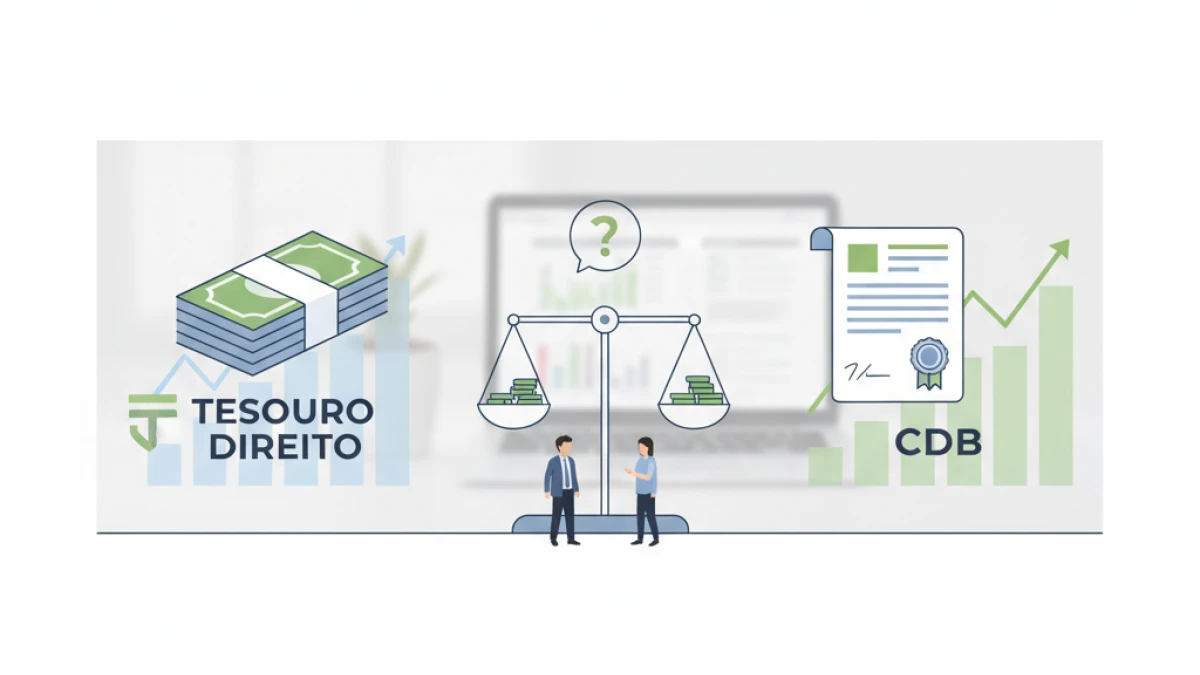
For those just starting to invest, understanding which application brings the best return is essential. In Brazil, Tesouro Direto and CDB are very popular options for those seeking security and profitability. In this article, we will explain the differences between the two, helping the beginner investor decide which is the best choice for their profile.
What it is / How it works
The Tesouro Direto is a federal government program that allows you to buy public bonds over the internet. When you invest, you are lending money to the government, which pays interest in return. These bonds may have fixed returns, tied to inflation or to the Selic rate.
The CDB (Bank Deposit Certificate), on the other hand, is a security issued by banks to raise funds. The investor lends money to the bank and receives interest as agreed. The CDB may have a prefixed return, a post-fixed return (usually tied to the CDI), or a hybrid return, mixing rates.
Advantages and benefits
Tesouro Direto offers security because it is guaranteed by the federal government, considered the lowest-risk option in the country. In addition, many bonds have daily liquidity, allowing redemption before maturity, and a low minimum initial investment, ideal for beginners. Another advantage is the possibility of protecting purchasing power with bonds tied to inflation.
CDBs can offer higher returns than Tesouro Direto, especially at smaller banks seeking to attract investors. Many CDBs are backed by the Deposit Guarantee Fund (FGC) up to a certain amount, which provides security. They also tend to have liquidity, but this varies depending on the chosen security. For beginners, CDBs with daily liquidity are recommended.
Precautions and points of attention
Although both are considered safe investments, it is important to be careful. In Tesouro Direto, bond prices can vary according to the interest rate, which can change the selling value before maturity. In addition, taxes such as Income Tax apply, with rates decreasing according to the investment term.
With CDBs, the risk lies in the issuing bank. CDBs from smaller banks may pay more, but they carry greater risk. Always check the solidity of the institution. Income Tax also applies. Another point is liquidity, which may be limited on some securities, making quick redemption difficult.
How to apply / get started
To invest in Tesouro Direto, you need to open an account with a brokerage or bank that offers the service, such as XP, Modal or BTG Pactual. The process is simple and done online. Once your account is activated, you can buy the bonds with affordable amounts, generally starting at R$30.
CDBs can be purchased at traditional banks such as Santander or Bradesco, or at digital banks such as Inter and Neon. The investor should research the conditions, such as return, term and liquidity, to choose the best product. It is also important to compare offers on investment platforms to find good opportunities.
Conclusion
Between Tesouro Direto and CDB, there is no single option that yields more in every case; it depends on the term, goal and profile of the investor. Tesouro Direto is a safe and practical option, ideal for protection against inflation and for those seeking liquidity. CDBs, on the other hand, may offer higher returns for those who accept fixed terms and the risk tied to the institution.
For beginners, the ideal approach is to study each option and consider diversifying investments to balance security and return. With information and planning, the investor can make the most of market opportunities.