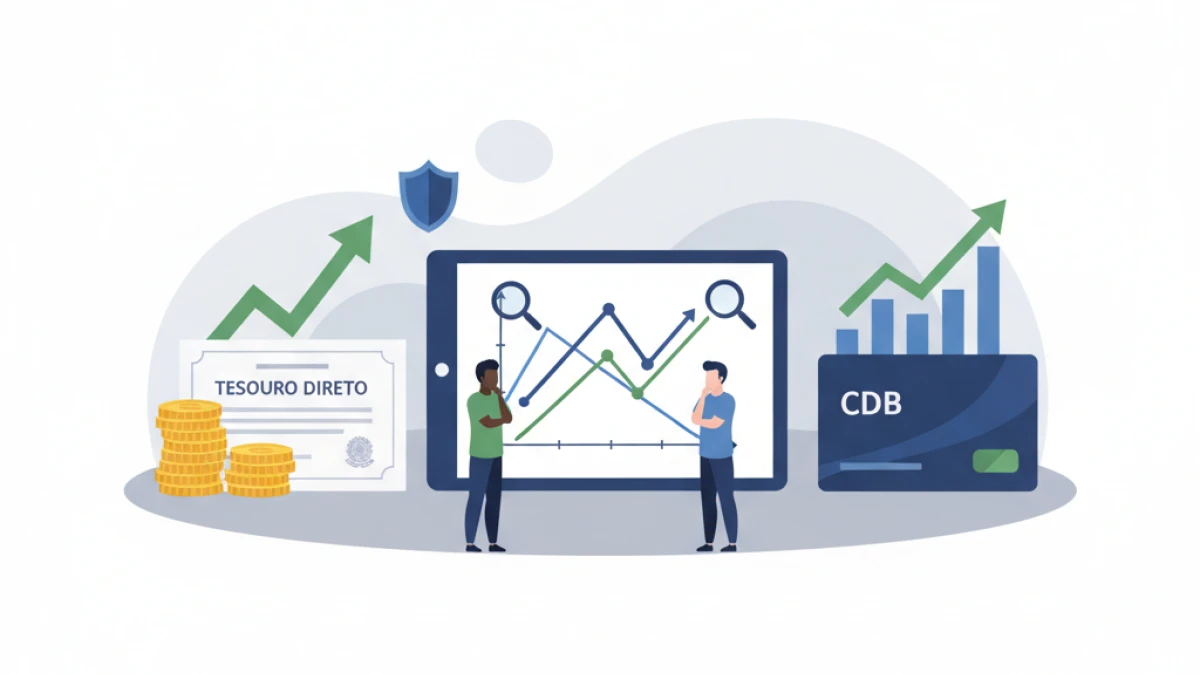
If you're starting to invest, you have probably wondered about Tesouro Direto or CDB: which investment offers the better return and safety? Both Tesouro Direto and CDB are quite popular options for those seeking low-risk investments. However, understanding the differences between them helps you decide which one best fits your profile and financial goals.
What it is / How it works
Tesouro Direto is a federal government program that allows the purchase of public bonds over the internet. These bonds are a way for the government to raise funds to finance its activities. By investing, you lend money to the government and receive interest in return.
CDB, or Bank Deposit Certificate, is a fixed-income security issued by banks. When you buy a CDB, you lend money to the bank in exchange for a return that can be pre-fixed, post-fixed, or hybrid.
Both are considered low-risk investments, but they have different characteristics in terms of term, liquidity, and taxation.
Advantages and benefits
Tesouro Direto usually offers greater security, since the risk lies with the federal government, which the market considers low. In addition, there are bonds with different terms and strategies, such as protection against inflation.
CDBs, in turn, can offer attractive returns, especially when issued by smaller banks seeking to raise funds. They are also backed by the Credit Guarantee Fund (FGC) up to a certain limit, providing an extra layer of security.
Another point is the ease of investing: institutions such as Banco Inter or XP offer intuitive platforms for both Tesouro Direto and CDB, simplifying the process for beginners.
Precautions and points of attention
Even though they are safe, these investments carry some risks. With Tesouro Direto, the main concern is the fluctuation in bond prices if you need to sell before maturity. This can affect the return.
With CDB, the risk lies in the financial health of the issuing bank. That is why it is important to check the institution's credit rating and not exceed the FGC limit.
In addition, liquidity varies: some CDBs only pay out the amount at maturity, while Tesouro Direto bonds offer daily liquidity, but with price variations.
How to apply / get started
To invest in Tesouro Direto, you simply open an account with institutions such as Rico, Modal, or Guide, which provide direct access to the government system. The minimum investment is usually affordable, making it easy to start.
To invest in CDB, you can choose digital banks such as Will Bank or fintechs such as Neon, using their apps to buy the security with a few clicks. Also check the information on return and term before investing.
In both cases, it is essential to read the documents provided and understand the costs involved, such as taxes and any brokerage fees.
Conclusion
When comparing Tesouro Direto or CDB, the choice depends on your profile and financial goals. Tesouro Direto offers more security due to government backing and inflation-protection options.
CDB may offer higher returns, but requires attention to the issuing institution and the limit guaranteed by the FGC. For those seeking convenience, digital banks such as C6 Bank and PicPay have made access to these investments much easier.
So carefully evaluate the characteristics of each before deciding where to invest your money. The key is to invest with awareness and seek returns without giving up safety.