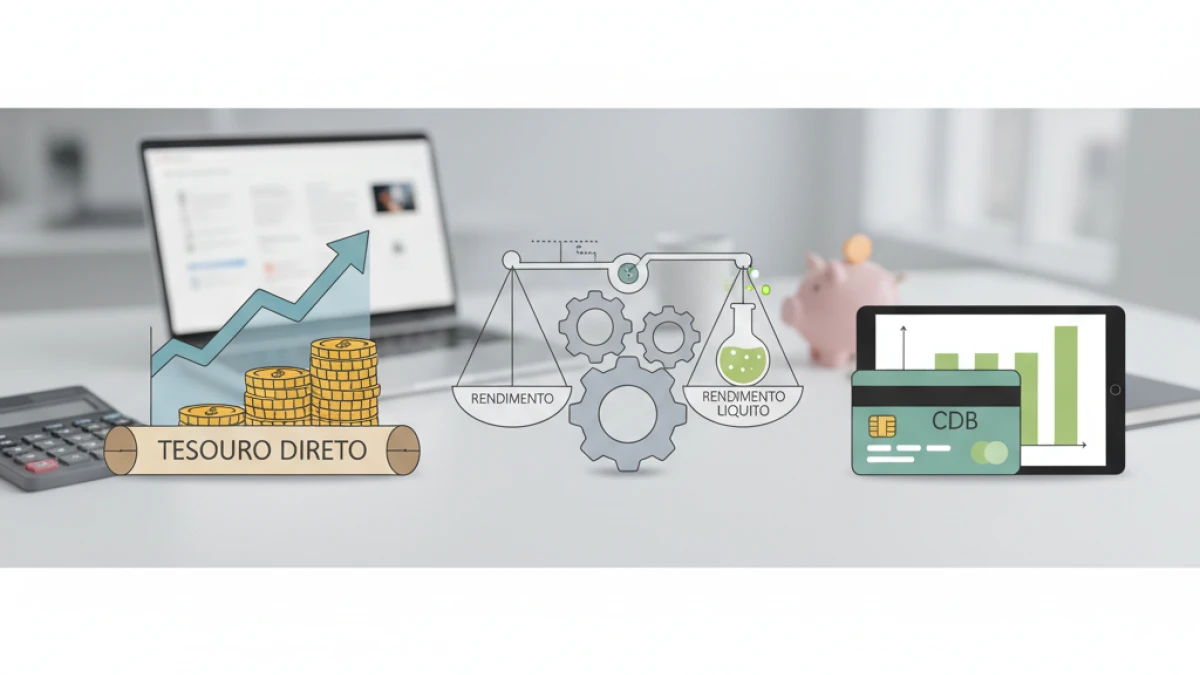
Understanding whether Tesouro Direto or CDB offers the best net return is essential for anyone who wants to invest safely and efficiently. The right choice depends on several factors, such as investor profile, terms and costs involved. In this article, I explain the differences between these two options in a simple and direct way, so you can make the best decision with confidence.
What it is / How it works
Tesouro Direto is a program of the National Treasury that allows individuals to buy federal public bonds. The investor lends money to the government and receives interest on this loan. The bonds have different types of remuneration, such as prefixed, post-fixed (linked to the Selic rate) or inflation-linked.
CDB (Bank Deposit Certificate), on the other hand, is a security issued by banks to raise funds. The bank pays interest to the investor at the end of the agreed term. There are prefixed CDBs, post-fixed CDBs (usually linked to the CDI) and hybrid ones, with different terms and liquidity.
Advantages and benefits
Tesouro Direto offers security, as it is guaranteed by the federal government, considered the most solid issuer in the country. In addition, many bonds have daily liquidity and the possibility of investing with low amounts. Platforms such as XP and Rico make access easier.
CDB can offer higher returns, depending on the issuing bank and the term. Banks such as Banco Inter, BTG Pactual and some financial cooperatives usually offer CDBs with attractive yields. In addition, CDBs are covered by the FGC (Credit Guarantee Fund) up to R$ 250 thousand per CPF and bank.
Precautions and points of attention
For Tesouro Direto, it is important to remember that the return can fluctuate according to the Selic rate and the market. There is regressive income tax, which varies according to the term, and a custody fee charged by B3. These costs affect the final net return.
In CDB, in addition to the regressive income tax similar to Tesouro, the investor should pay attention to the soundness of the issuing bank and the investment term. It is also important to consider liquidity, as some CDBs do not allow early redemption without losing interest.
How to apply / get started
To invest in Tesouro Direto, you need to open an account with a brokerage or bank that offers this option, such as Genial, Guide or Inter. After registration and transfer of funds, choose the bond according to your profile and goal.
For CDB, open an account at banks such as Banco do Brasil, Bradesco, or fintechs such as Neon and PagBank. The choice of CDB should consider return, term and liquidity. Compare offers, analyze conditions and purchase the security directly through internet banking or the app.
Conclusion
The decision between Tesouro Direto or CDB for the best net return depends on your profile and financial goals. While Tesouro Direto offers security and ease, CDB can guarantee higher returns, especially at mid-sized banks and fintechs. Evaluate costs, terms and risks to invest consciously and achieve your goals.