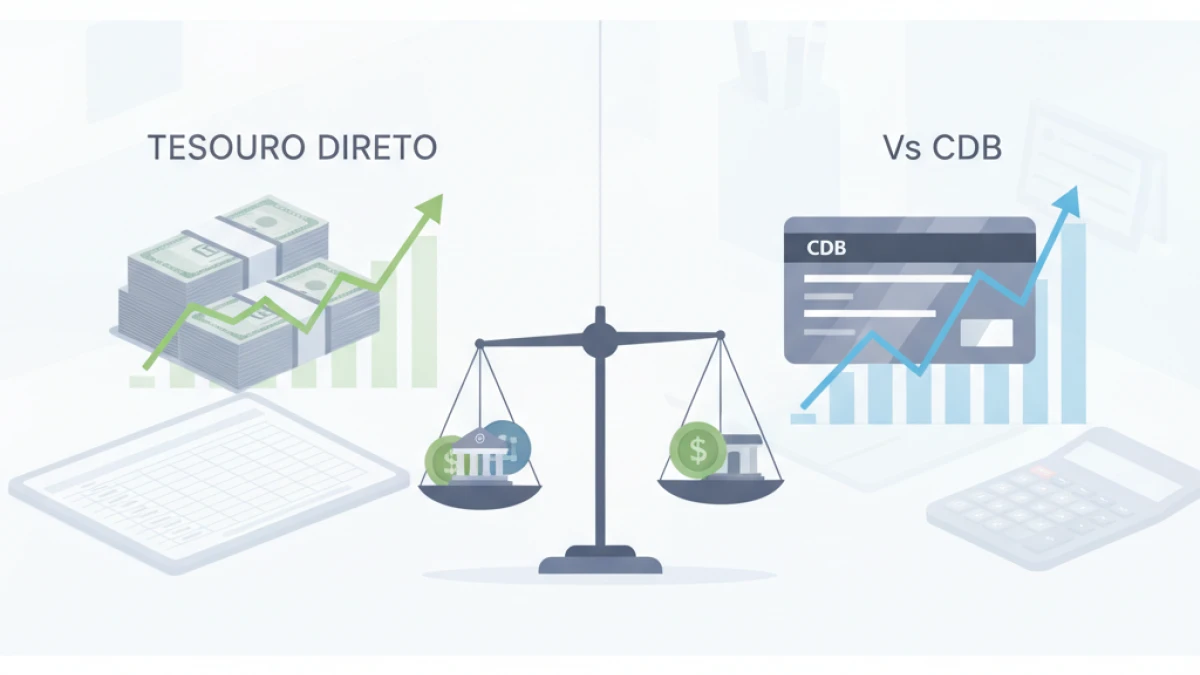
Investing safely and earning good returns is the desire of many Brazilians. In light of this, the frequent question arises: Tesouro Direto or CDB, which investment offers the best secure return? Both are popular options for those seeking peace of mind and consistent gains. Let's understand the characteristics of each to help you choose the best path for your money.
What is Tesouro Direto and CDB / How it works
Tesouro Direto is a federal government program that allows individuals to buy public bonds. It works like a loan to the government which, in exchange, pays interest to the investor. There are several types, such as prefixed, inflation-linked or Selic-rate-linked, with different terms and returns.
CDB (Bank Deposit Certificate), on the other hand, is a security issued by banks and financial companies to raise funds. By investing in a CDB, you lend money to the financial institution, which returns the amount with interest at the end of the agreed period. The return can be prefixed, post-fixed or linked to inflation.
Advantages and benefits
Tesouro Direto has the advantage of being guaranteed by the National Treasury, considered low risk. In addition, its liquidity is quite attractive, allowing daily redemption before maturity in many cases. Investments through banks such as Inter or BTG Pactual offer simple and accessible platforms.
CDBs, in turn, tend to offer higher returns for those who invest in securities from smaller banks, such as PAN or Daycoval. Many are protected by the Credit Guarantee Fund (FGC) up to the stipulated limit, which increases security for the investor. Another advantage is the variety of terms and minimum amounts.
Precautions and points of attention
Despite its safety, it is important to remember that Tesouro Direto may experience price fluctuations before maturity, especially for prefixed or inflation-linked bonds. This means that if the money needs to be redeemed before the final date, the amount may be lower.
In the case of CDBs, in addition to evaluating the rate offered, pay attention to the soundness of the issuer to minimize risks. Traditional banks such as Itaú and Santander tend to have lower risk but lower returns, while fintechs and digital banks may offer higher gains, but with caution. Also check the term and whether early redemption is possible.
How to apply / get started
To invest in Tesouro Direto, simply open an account with a brokerage or bank that offers this option, such as Rico, XP or Modal. Then choose the bond that best fits your profile, enter the amount and confirm the purchase on the official Tesouro website or through the brokerage's system.
In the case of CDBs, the process is also simple. You can contract the security directly through your bank, whether Bradesco, Caixa or a digital bank such as PicPay, or through brokerages that offer products from multiple issuers. Compare the rates and terms available before deciding.
Conclusion
When evaluating Tesouro Direto or CDB, both offer secure returns and are great for different investor profiles. Tesouro Direto brings greater liquidity and government security, ideal for those who prioritize lower risk. CDBs can offer more attractive returns, especially at smaller banks, with FGC guarantee.
The best investment depends on your goal, time horizon and risk tolerance. Analyze each option calmly, diversify whenever possible and count on institutions such as Neon, Safra or BTG Pactual for personalized guidance. This way, you can put your money to work with peace of mind.