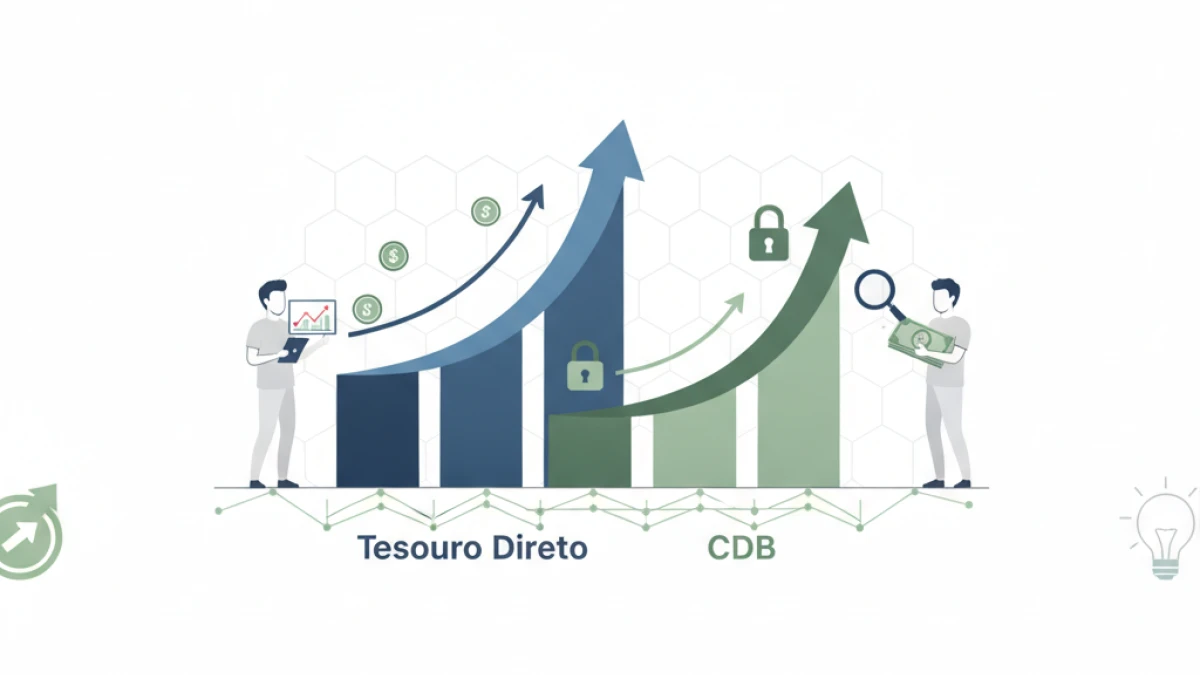
Deciding where to invest your money is a common question for anyone who wants to maximize their returns. Two popular options are the Tesouro Direto and the CDB (Bank Deposit Certificate). Both offer security and profitability, but each has its own particularities. It's worth knowing the differences to make the best choice for your profile and financial goal.
What is Tesouro Direto and how does it work?
Tesouro Direto is a federal government program that lets you buy public bonds over the internet. When you invest in the Tesouro, you are lending money to the government. In return, you receive interest that varies according to the bond chosen. There are options with prefixed interest, indexed to inflation or to the Selic rate.
Tesouro Direto bonds have daily liquidity, which means you can sell your investment at any time. In addition, the minimum amount to invest is affordable, making it easier for those who are just starting out.
What is a CDB and how does it work?
A CDB is a bond issued by banks and financial companies to raise funds. By investing in a CDB, you are lending money to the financial institution and receive interest in return. The interest can be prefixed, post-fixed (usually linked to the CDI) or hybrid.
CDBs have varied terms, which can range from months to a few years. Liquidity depends on the contract: some allow redemption before maturity and others do not. Generally, the minimum investment is higher than that of Tesouro Direto.
Advantages and benefits of Tesouro Direto and CDB
Tesouro Direto offers high security because it is guaranteed by the federal government. It has low costs and you can invest small amounts. Daily liquidity is ideal for those who want flexibility.
CDB can offer more attractive interest rates, especially at smaller banks or fintechs such as Banco Inter or Neon. Another advantage is the FGC (Credit Guarantee Fund) guarantee for investments of up to R$ 250 thousand per CPF and institution, increasing security.
Precautions and points of attention
With Tesouro Direto, it is important to observe the type of bond and the term to avoid losses from mark-to-market valuation on early redemptions. Also consider custody fees charged by B3, which are normally small.
With CDBs, analyze the term and liquidity to match your financial goal. Pay attention to the solidity of the issuing institution and check whether the investment is protected by the FGC. Fees and taxes can impact the final return.
How to apply and start investing
To invest in Tesouro Direto, you need to open an account with a brokerage or bank that offers the service, such as XP, Rico or Modal. After registration, just transfer the money and choose the bond you want to buy through the website or app.
To invest in a CDB, you can look at digital banks such as C6 Bank, PicPay or traditional ones such as Itaú and Santander. The process is similar: open an account, transfer the amount and purchase the bond through the available channel.
Conclusion
Choosing between Tesouro Direto or CDB depends on your profile, goals and liquidity needs. The Tesouro is safer and more accessible for beginner investors due to its daily liquidity and low minimum amount. The CDB can bring better returns, especially at smaller banks, but requires attention to the term and solidity.
The ideal approach is to diversify, taking advantage of what each option offers. Assess your investment horizon and the risks you accept, and build a balanced portfolio to seek maximum returns safely.