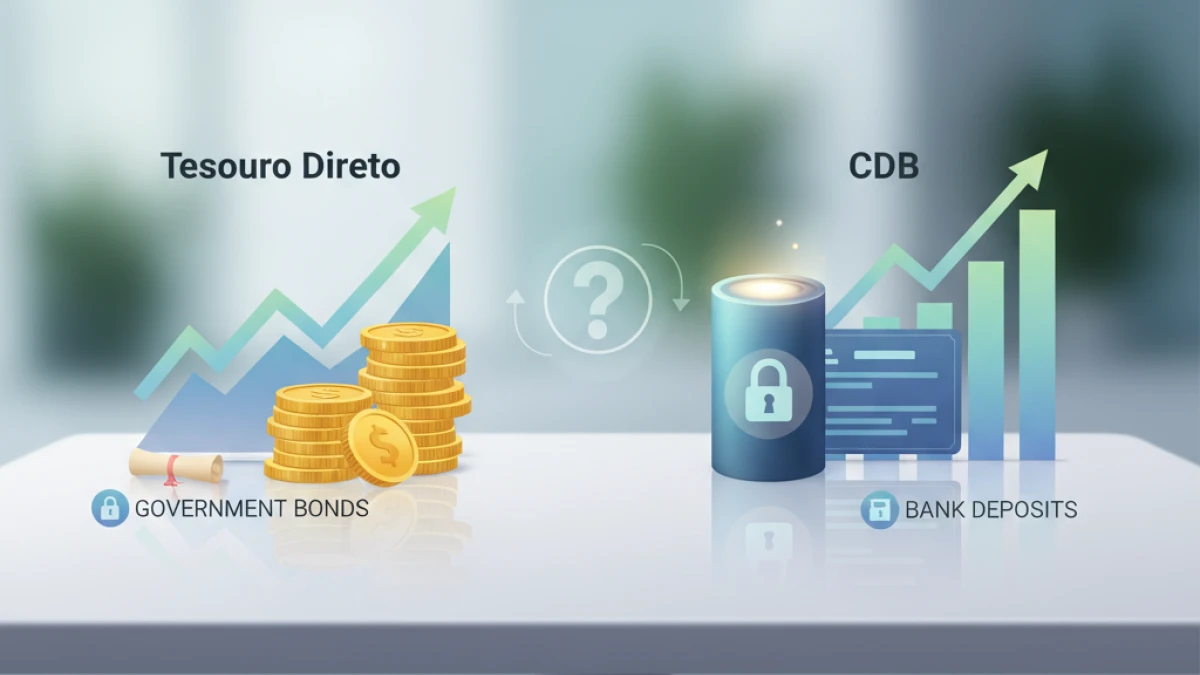
When it comes to investing, the question of choosing between Tesouro Direto or CDB is quite common. Many investors want to know where to invest to get higher returns and security at the same time. Understanding the differences and characteristics of each option is essential to make a decision aligned with your financial goals. In this article, we will explain how these investments work and what to consider to choose the best one for your profile.
What it is / How it works
Tesouro Direto is a federal government platform that allows individuals to buy government bonds. Basically, you lend money to the government and, in return, receive interest over the agreed term. It is considered one of the safest investments in the country, as it is backed by the National Treasury.
The CDB (Bank Deposit Certificate) is a security issued by banks and financial companies to raise funds. When you invest in a CDB, you are lending money to the financial institution, which pays interest in return. The safety of a CDB depends on the issuing institution and the coverage of the Credit Guarantee Fund (FGC), which protects up to a certain amount per individual taxpayer ID and per bank.
Advantages and benefits
Tesouro Direto offers high liquidity, which means you can sell your bonds before maturity. In addition, government bonds come in different types, such as inflation-linked, fixed-rate, or Selic-rate bonds, allowing diversification according to your goal.
CDBs usually offer higher returns than savings accounts and have the advantage of being issued by several banks, such as Safra, Banco Inter, and Banco BS2. Some CDBs even offer daily liquidity and pre-fixed or post-fixed returns, making financial planning easier.
Precautions and points of attention
Although Tesouro Direto is very safe, its bonds fluctuate in market price, especially if you need to sell before maturity, which can cause temporary losses. In addition, income tax is charged on the earnings.
In the case of a CDB, it is important to assess the soundness of the issuing bank and confirm whether the invested amount is covered by the FGC. Also pay attention to the term and redemption conditions, as not all offer daily liquidity.
How to apply / get started
To invest in Tesouro Direto, you must open an account with a brokerage or digital bank that offers the service, such as XP Investimentos, Rico, or Banco Inter. After registering and transferring funds, you can buy bonds through the Tesouro Direto platform.
To invest in a CDB, the process is similar: choose a trustworthy financial institution, open a digital or traditional bank account that offers it, such as Bradesco, Itaú, or Neon. Make the transfer and select the CDB that best fits your plans.
Conclusion
Both Tesouro Direto and CDBs are great options for investors seeking security and good returns. The choice between them should consider your profile, goals, and liquidity needs. If you prefer an extremely safe and flexible investment, Tesouro Direto may be ideal. For those seeking higher returns and willing to assess the institution's risk, the CDB is an interesting alternative.
Do a careful analysis and, if possible, diversify your investments to balance risk and return. With knowledge and planning, it is possible to reach your financial goals with peace of mind.