Introduction
Organizing your monthly budget is essential to keep your financial health in order and avoid unpleasant surprises. Financial setbacks can compromise your plans and cause stress, but with good management of your income and spending, it is possible to prepare for these moments. In 2026, budget control is even more necessary in the face of volatile economic scenarios and changes in consumption habits.
Why is it important to organize your monthly budget?
Keeping your finances balanced gives you clarity about how much money comes in and goes out, and ensures that essential expenses are paid on time. It also allows you to direct resources toward investments, emergency reserves and personal goals. According to data from Febraban, consumers who organize their budget have greater control over debts and a lower default rate.
Step by step to organize your monthly budget
1. List all your sources of income
Include salaries, investment income, freelance work and other sources of money. This comprehensive view helps you know exactly how much you have available each month.
2. Identify and categorize all expenses
Split your spending into essentials (rent, food, fixed bills) and variable costs (leisure, extra purchases). Use digital spreadsheets or financial apps such as Guiabolso or Mobills to make tracking easier.
3. Set priorities
Essential expenses should have priority for payment. Then set a limit for leisure and non-essential spending to maintain fiscal balance.
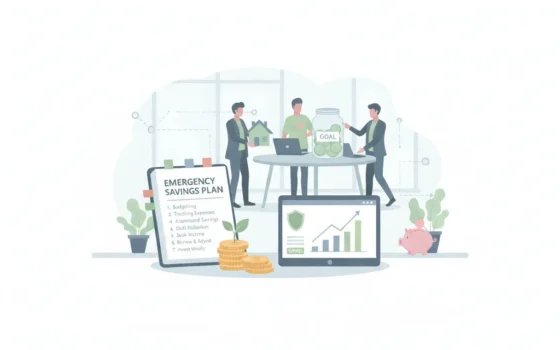
4. Build an emergency fund
A financial reserve equivalent to at least three months of your expenses is essential to cover unexpected events without compromising your budget. Investment platforms such as BTG Pactual digital offer options for applications with liquidity and security for this purpose.
5. Track and adjust your budget regularly
Reviewing your income and spending monthly lets you make adjustments as your income or expenses change. Digital banks such as Banco Inter provide integrated tools to make this tracking easier.
Tips to avoid financial setbacks
- Take out adequate insurance: having home, health or auto insurance can prevent large unexpected expenses.
- Avoid high-cost debt: prioritize paying credit cards and loans with high interest so you don't compromise your budget.
- Keep control of subscriptions and services: review them regularly to cancel what you don't use.
- Use technology to your advantage: financial apps help with control and send alerts to avoid forgetting payments.
Comparison between different financial institutions for money management
Fintechs such as PicPay and Mercado Pago offer practical solutions for payments and control, while traditional banks such as Banco do Brasil and Santander have credit lines and personalized services for personal finance management. Cooperatives such as Sicoob provide closer service and differentiated conditions for their members. Evaluating which institution offers tools that fit your profile will help you succeed in organizing your finances.
Conclusion
Organizing your monthly budget is a fundamental step toward financial security and avoiding unexpected events that can compromise your balance. With simple methods, the use of technology and discipline, it is possible to build a solid reserve, manage your finances better and have more peace of mind to pursue your dreams. Start applying these strategies right now and transform your relationship with money for a more prosperous 2026.
Want to learn more about personal finance? Follow content from trusted sources such as InfoMoney Finanças Pessoais and Valor Econômico.